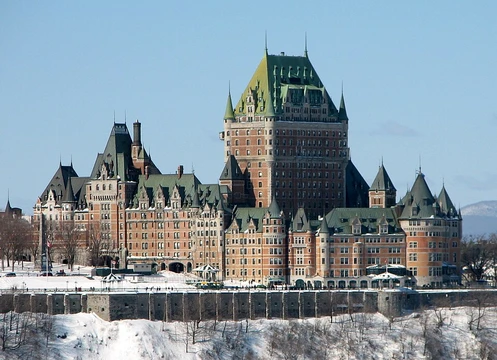
Gothic Revival architecture
A movement reviving medieval Gothic architecture in the 19th century.

Gothic Revival, also referred to as Victorian Gothic or Neo-Gothic, is an architectural movement that, after a gradual build-up beginning in the second half of the 17th century, became widespread in the first half of the 19th century, mostly in England. Its admirers sought to revive medieval Gothic architecture, intending to complement or even supersede the neoclassical styles prevalent at the time, drawing upon features such as decorative patterns, finials, lancet windows, and hood moulds.
- field
- Architecture
- nationality
- Primarily English, with international spread
- known_for
- Revival of medieval Gothic architectural forms
- peak_period
- First half of the 19th century to 1870s
- decline_began
- 1880s and early 1890s
Lore & Background
Gothic Revival also took on political connotations, with the Neoclassical style seen as associated with republicanism and liberalism, while the Gothic Revival became associated with monarchism and conservatism. This was reflected in the choice of styles for rebuilt government centers such as the British Parliament's Palace of Westminster, the Canadian Parliament Buildings, and the Hungarian Parliament Building.
Reader's Guide
By the middle of the 19th century, Gothic Revival had become the pre-eminent architectural style in the Western world, only to begin falling out of fashion in the 1880s and early 1890s. Its influence peaked by the 1870s, after which new movements like the Arts and Crafts movement and Modernism gained ground. By the 1930s, Victorian-era architecture was generally condemned or ignored. Gothic Revival architecture varied considerably in faithfulness to medieval ornamental styles and construction principles, sometimes using contemporary materials like iron and steel in ways never seen in medieval exemplars. The movement spread from England to Europe, Australia, Asia, and the Americas, leading to the construction of very large numbers of Gothic Revival structures worldwide.
Did You Know?
- Gothic Revival is also referred to as Victorian Gothic or Neo-Gothic.
- The movement became widespread in the first half of the 19th century, mostly in England.
- Gothic Revival architecture sometimes used iron and, after the 1880s, steel in ways never seen in medieval exemplars.
More in Architectural Styles And Landmarks 1-24
Elsewhere in the Architectural Styles And Landmarks universe
Spotted an error? Know more?
This is a living reference — every entry is fact-audited, and reader corrections feed straight into our audit queue. Suggest an edit · See this site's audit record