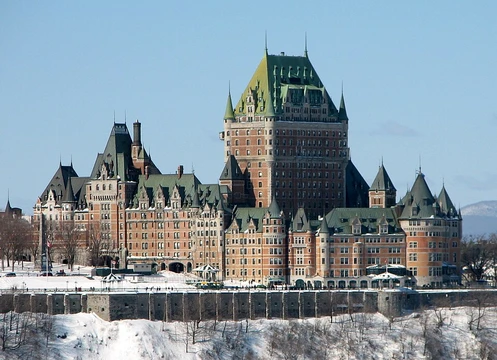
Gothic architecture
Medieval architectural style defined by the pointed arch and verticality.

Gothic architecture is an architectural style prevalent in Europe from the late 12th to the 16th century, during the High and Late Middle Ages, surviving into the 17th and 18th centuries in some areas. It evolved from Romanesque architecture and was succeeded by Renaissance architecture. It originated in the Île-de-France and Picardy regions of northern France. The defining design element of Gothic architecture is the pointed arch, which led to the development of the pointed rib vault and flying buttresses, combined with elaborate tracery and stained glass windows.
- field
- Architecture
- known_for
- Pointed arch, rib vault, flying buttresses, stained glass windows
- period
- Late 12th to 16th century (surviving into 17th–18th centuries in some areas)
- origin
- Île-de-France and Picardy regions of northern France
- also_called
- Opus Francigenum ('French work'), opus modernum, novum opus, maniera tedesca ('German style')
Lore & Background
Medieval contemporaries characterized the style in Latin as opus Francigenum ('French work' or 'Frankish work'), as opus modernum ('modern work'), or as novum opus ('new work'). Italian-speakers could call it maniera tedesca ('German style'). The term 'Gothic architecture' originated as a pejorative description. Vasari was echoed in the 16th century by François Rabelais, who referred to 'Gotz' and 'Ostrogotz'.
Reader's Guide
He argued that the pointed arch's sophistication was not owed to the Goths but to Islam, who in turn got it from the Greek. Several authors have nevertheless claimed that the Gothic style had likely filtered into Europe through Spain or Sicily, influenced by the Muslim conquest of the Iberian Peninsula in the early 8th century, and via merchants, pilgrims, and other travelers. Common examples are found in Christian ecclesiastical architecture, including cathedrals, churches, abbeys, and parish churches, as well as castles, palaces, town halls, guildhalls, universities, and private dwellings. Many of the finest examples are listed by UNESCO as World Heritage Sites. With the development of Renaissance architecture in Italy during the mid-15th century, the Gothic style was supplanted, but in some regions, notably England and what is now Belgium, Gothic continued to flourish into the 16th century. A series of Gothic revivals began in mid-18th century England, spread through 19th-century Europe, and continued, largely for churches and university buildings, into the 20th century.
Did You Know?
- The term 'Gothic' was first applied contemptuously during the later Renaissance by those ambitious to revive classical architecture.
- The defining design element of Gothic architecture is the pointed arch.
- Christopher Wren compared Gothic architecture to Islamic architecture, calling it the 'Saracen style'.
More in Architectural Styles And Landmarks 1-24
Elsewhere in the Architectural Styles And Landmarks universe
Spotted an error? Know more?
This is a living reference — every entry is fact-audited, and reader corrections feed straight into our audit queue. Suggest an edit · See this site's audit record